
How Vision Inspection Defects Affect Pharmaceutical Product Quality
In pharmaceutical manufacturing, consistent product quality is essential. Even small defects in tablets, capsules, blister packs, labels, or printed codes can create quality and compliance challenges. This is why manufacturers are increasingly using automated vision inspection systems for real-time quality control.
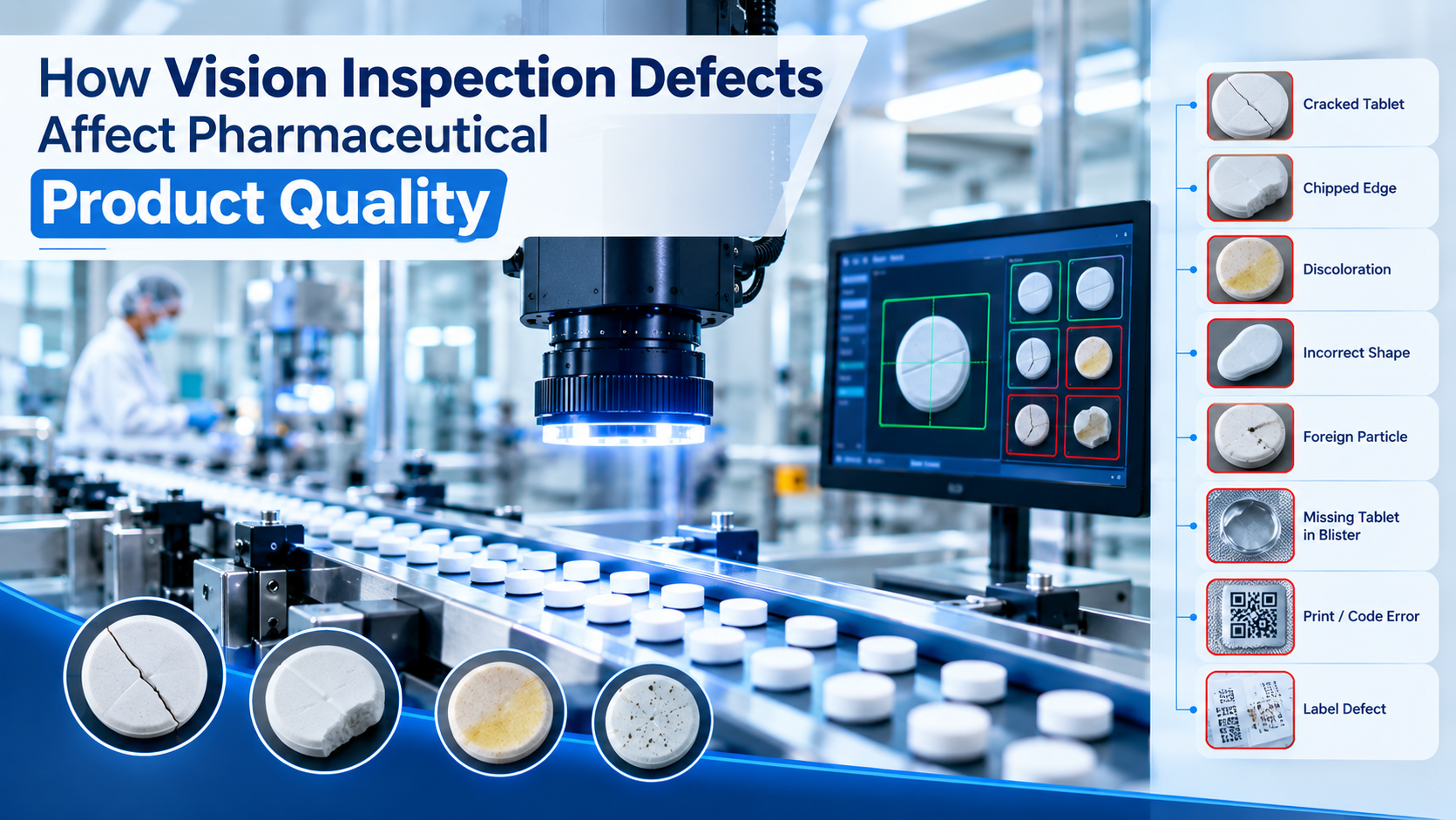
Common vision inspection defects include cracked or chipped tablets, incorrect tablet color or shape, missing products, packaging defects, unreadable codes, label errors, and surface contamination. Detecting these issues manually can become difficult on high-speed production lines, where large volumes of products need to be inspected consistently.
Tablet vision inspection provides an automated approach to checking tablets and other oral solid dosage forms. High-speed cameras and image-processing technologies can inspect products for characteristics such as color, size, shape, fractures, chips, and foreign objects. Jekson Vision's tablet inspection technology, for example, is designed to inspect tablets, capsules, and softgels while supporting high-speed pharmaceutical production.
Beyond tablet inspection, modern vision systems can also support barcode and OCR/OCV verification, blister inspection, vial inspection, and packaging quality checks. This makes vision inspection an important part of automated pharmaceutical quality control.
As pharmaceutical production becomes faster and more automated, manufacturers need inspection technologies that can deliver consistent results without slowing production. Understanding the types of vision inspection defects that can occur is an important first step toward building an effective quality inspection process.
Learn more about automated vision inspection systems for pharmaceutical manufacturing: https://jeksonvision.com/vision-inspection/
